24.06.2020
Views: 282
The new installation simulates the impact of studded tires on asphalt concrete pavement
In 2020, a large-scale equipment upgrade is taking place in the stationary laboratories of the FAA ROSDORNIA within the framework of the national project "Safe and High-quality Roads". The new equipment will be used in the framework of quality monitoring (audit) for testing road construction materials for compliance with the requirements of current regulatory and technical documents. We talk about new progressive installations and devices in detail.
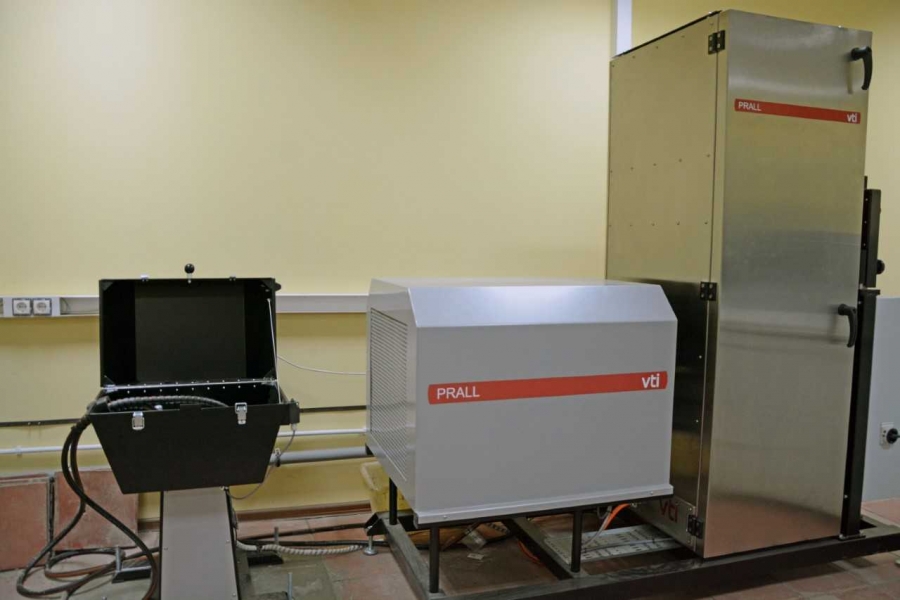
The installation for testing the abrasion of asphalt concrete samples Prall-test is designed to determine the abrasion of the upper layer of asphalt concrete pavement. The test simulates the impact of studded tires of motor vehicles in a humid environment. The test is carried out on cylindrical samples prepared in the laboratory or selected from road surfaces.
In GOST R 58406.5-2020 "Public automobile roads. Mixtures of asphalt concrete road and asphalt concrete. Method of determination of attrition" the method of conducting the test is established. Its essence is to determine the mass loss of the test sample subjected to the abrasion effect of steel balls, simulating the impact of studded tires on asphalt concrete.
The test unit of the installation implements the vertical reciprocating motion of the test sample located in the test chamber, along with pumping water through the internal volume of the test chamber at a temperature of 5 ± 1 °With a fixed flow rate. The test is considered completed after 15 minutes of operation of the installation with a frequency of 950 Hz. Abrasion resistance is assessed by reducing the volume of the sample.
The features of the automatic Prall-test installation are the presence of two water cooling tanks, which allows you not to spend a long time cooling a large volume of water between sample testing cycles. Automatic software settings control the entire test cycle. If the water temperature does not meet the requirements of the standard or other deviations, the test is automatically interrupted.
In 2020, a large-scale equipment upgrade is taking place in the stationary laboratories of the FAA ROSDORNIA within the framework of the national project "Safe and High-quality Roads". The new equipment will be used in the framework of quality monitoring (audit) for testing road construction materials for compliance with the requirements of current regulatory and technical documents. We talk about new progressive installations and devices in detail.
The installation for testing the abrasion of asphalt concrete samples Prall-test is designed to determine the abrasion of the upper layer of asphalt concrete pavement. The test simulates the impact of studded tires of motor vehicles in a humid environment. The test is carried out on cylindrical samples prepared in the laboratory or selected from road surfaces.
In GOST R 58406.5-2020 "Public automobile roads. Mixtures of asphalt concrete road and asphalt concrete. Method of determination of attrition" the method of conducting the test is established. Its essence is to determine the mass loss of the test sample subjected to the abrasion effect of steel balls, simulating the impact of studded tires on asphalt concrete.
The test unit of the installation implements the vertical reciprocating motion of the test sample located in the test chamber, along with pumping water through the internal volume of the test chamber at a temperature of 5 ± 1 °With a fixed flow rate. The test is considered completed after 15 minutes of operation of the installation with a frequency of 950 Hz. Abrasion resistance is assessed by reducing the volume of the sample.
The features of the automatic Prall-test installation are the presence of two water cooling tanks, which allows you not to spend a long time cooling a large volume of water between sample testing cycles. Automatic software settings control the entire test cycle. If the water temperature does not meet the requirements of the standard or other deviations, the test is automatically interrupted.