
In Russia, they want to introduce noise lanes, raised zebras, "smart" traffic lights equipped with motion sensors and the British "Friendly Crossing" system (Puffin Crossing). The Ministry of Transport is working on such proposals, the ministry told Izvestia. Changes to the current GOST standards will be presented before the end of 2020, RosdorNIA explained. After the standards are approved, the authorities will be able to apply innovations on the streets. It is assumed that this will reduce the number of accidents with pedestrians — in some cases by 15-24%. Such solutions need to be applied pointwise so as not to create even more problems for motorists in large cities, experts say.
Will raise pedestrians
The Russian Road Research Institute (RosdorNII), commissioned by the Ministry of Transport, analyzed foreign and domestic experience in improving pedestrian safety. The most effective measures to reduce mortality have been identified, as well as a list of requirements that need to be reflected in domestic regulatory documents, RosdorNIA told Izvestia.
src="https://cdn.iz.ru/sites/default/files/styles/520x336/public/article-2018-12/RIAN_3115823.HR_.ru_.jpg?itok=NpQGMwP6" width="520" height="336">Changes to national standards (GOST) are planned to be prepared by the end of 2020, the institute added.
To reduce the speed of movement (calm down) the flow of traffic, it is proposed to more actively use noise lanes and artificial bumps before crossings. To achieve this goal, indirect means of influence also work effectively abroad: zigzag movement of cars, narrowing of lanes or reducing their number, RosdorNIA notes.
It is also proposed to try out on the streets of Russian cities the combination of a pedestrian crossing with a "speed bump". Now such experimental "zebras" already exist on some streets of Moscow and the region. The essence of the design is that the transition is raised above the ground by creating a trapezoidal irregularity — for example, with the help of an additional layer of asphalt. There are such transitions abroad, including in the USA and the UK. Their use reduces the speed of traffic flow by 4-20 km / h, and the total number of accidents with victims falls by an average of 15%, RosdorNIA explained to Izvestia.
The Institute's experts also pay attention to insufficient lighting of pedestrian crossings and a suboptimal layout of the lanterns located opposite the zebra crossing. The lamps are proposed to be shifted 2-4 m towards traffic, which should increase speed and improve pedestrian recognition by drivers. It is also noted that it is advisable to additionally equip the crossings with signal lights and beacons.
The Ministry of Transport received RosdorNIA's proposals, they will be worked out, the press service of the department told Izvestia.
Life-saving electronics
The system of separating traffic and pedestrian flows using traffic lights abroad is in many ways similar to Russian practice, but there are features that it is advisable to take into account, RosdorNIA notes.
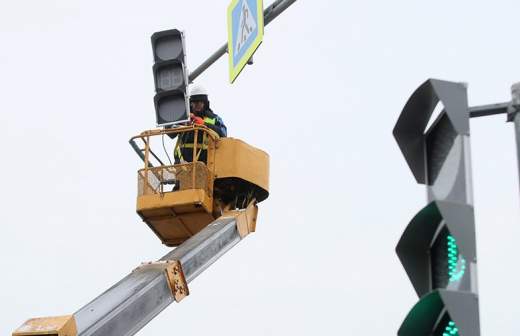
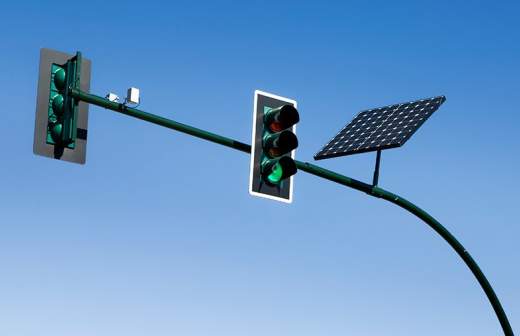
In particular, experts pay attention to the British Puffin Crossing system ("friendly crossing"). It provides for the installation of "smart" traffic lights with sensors that respond to pedestrians. Such traffic lights will not turn on red while a person is walking along the zebra, but they will not keep it green if there is no one else at the crossing.
"The sensor combines stereo vision technology and an intelligent pedestrian detection system on curbs," RosdorNIA explained.
In addition, pedestrians and cyclists can adjust the phases of the "smart" traffic light themselves — but not using the usual buttons that are available at some intersections in Russia, but through special scoreboards. By requesting green, a pedestrian will see on the same scoreboard that it has lit up — he will not have to follow the traffic light on the other side of the street.
One piece of equipment of a "smart" traffic light costs today from 50 thousand rubles. There are from two to ten of them at the intersection. If you add software installation and supervision here, then comprehensive maintenance will cost 1-1.5 million rubles a year, Vadim Sakhonko, a technology expert of NP GLONASS, estimated in an interview with Izvestia.
Such "smart" traffic lights can reduce unnecessary waiting time for both motorists and pedestrians. An analysis of the effectiveness of the system, which was conducted in the United States for three years, showed a decrease in the number of accidents with pedestrians by almost a quarter (24%), RosdorNIA noted.
In Russia the number of accidents involving pedestrians is decreasing, according to the operational data of the traffic police for 11 months of 2019. During this period, 42,706 accidents occurred (-4.9% compared to the same period of 2018), in which more than 40 thousand people were injured, more than 4 thousand died. A significant part of the accidents involving pedestrians — 15,855 cases — occurred through their fault. The national project "Safe and high-quality roads" provides for a reduction in road deaths by 2024 by more than three times from the level of 2017 — up to four people per 100 thousand population.
Apply, but check
The proposed solutions, especially the narrowing of roadways and the device of zigzag movement of cars, should be applied very precisely and accurately, according to the coordinator of the "Blue buckets" Peter Shkumatov.
— They are good for cities that are sufficiently provided with infrastructure for comfortable movement of motorists. But, for example, in Moscow, the length of roads is eight times less than in London," he told Izvestia.
The same thing, according to him according to the opinion, it concerns elevated pedestrian crossings and numerous "speed bumps". These are successful solutions for small European cities. They can also be used in Russia — in residential areas and on small narrow streets. But if you apply them anywhere, it will lead to traffic jams, unmotivated traffic violations and, as a result, to an increase in the number of fines, and not an increase in safety, he added.
Mikhail Blinkin, Director of the HSE Institute of Transport Economics, told Izvestia that the proposed solutions do not fully take into account Russian specifics. He agrees that many of them have indeed been successfully used in the EU and the USA for a long time. But this does not mean that they are suitable for Russian realities. Both elevated crossings and "smart" traffic lights need to be installed in areas of low-rise buildings, which are practically absent in Russian cities, the expert explained.
Источник: