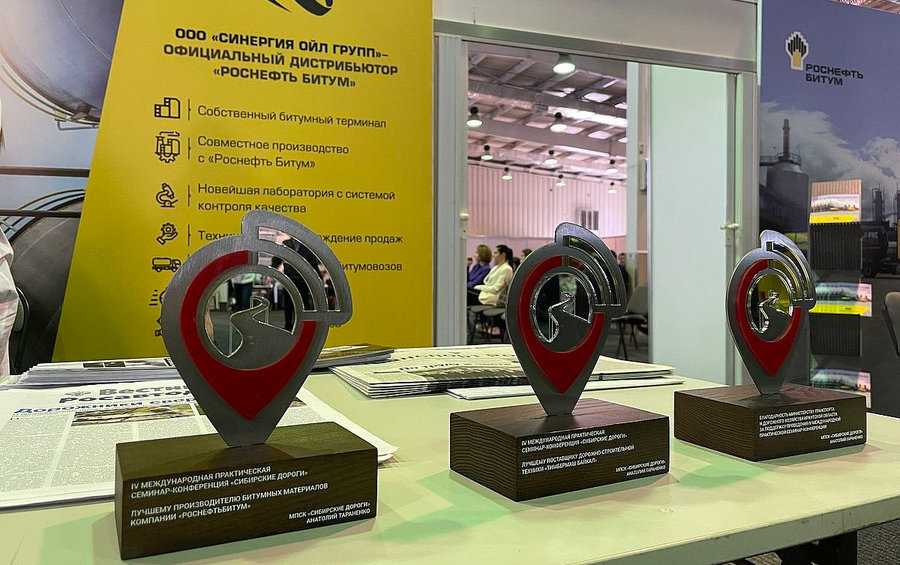
It is hardly an exaggeration to say that over the four years of its existence, the International Seminar-Conference "Siberian Roads" has become the most authoritative and representative independent expert-discussion platform on road topics throughout the territory from the Urals to the Far East. It was created for communication between representatives of the road construction industry, manufacturers of building materials, employees of design and scientific institutions in this field, customers.
The seminar-conference "Siberian Roads" touches on the most pressing and topical topics, - said the organizer of the event Anatoly Taranenko. - When in 2019 we decided to gather for the first time, new road GOSTs and national standards were introduced in the country. We had to discuss these documents together and understand what was what. Then we planned that about 30 people would take part in the conference, and more than two hundred came. A year later we had new ones questions, and we came to the conclusion that such meetings should be held constantly.
Interest in the conference is steadily growing, and in 2022, despite the restrictions associated with the pandemic, about 650 people from all over the country came to Irkutsk and Khabarovsk.
Anatoly Taranenko expressed special gratitude to the partners of the event - the company "RN-Bitumen".
Alexey Kornilaev, General Director of RN-Bitumen LLC, expressed satisfaction in his welcoming speech that the conference once again brought together a wide range of participants: from representatives of state regulators to direct customers. "This is a unique opportunity," Alexey Kornilaev noted, "to combine all segments of road construction on one site."
A solidary point of view was expressed by the chairman of the commission on road construction equipment "Support of Russia" Sergey Lyutikov. The seminar-conference "Siberian Roads", he noted, allows all representatives of the road construction industry to be in dialogue, exchange experience, find business contacts. Only by uniting to solve common issues will we be able to keep up with the times and respond to those challenges, which form the current trends in road construction, concluded Lyutikov.
Answering the question: how is the current, fourth, forum different from the previous three? - its organizer Anatoly Taranenko noted that this year the main topic of the conference was the discussion of practical developments of its participants at all stages of road construction works. "We tried to find speakers who can tell about their specific experience - from the creation of new technologies, equipment, the development of road materials to their application in practice, and the second is that this year there are two cities at once," Taranenko said.
The group of companies "Asphalt Concrete Plant No. 1" from St. Petersburg, has long considered its mission to transfer the accumulated experience in road construction to other representatives of the industry. For the seminar-conference "Siberian Roads", the company prepared a report "Resource-saving technologies in the production of asphalt concrete mixtures: practical experience of the ABZ No. 1 Group of Companies". The head of the laboratory Kirill Melnik told about the main technologies for the manufacture of asphalt concrete mixtures (ABS). Many of them, one way or another, are related to energy saving. The use of warm ABS allows, for example, to reduce the carbon footprint by 27%, and ABS with RAP - recycled recycled asphalt concrete - by 50%.
Kirill Melnik paid special attention to cast asphalt concrete. In his opinion, at the moment it is one of the most underestimated technologies. Meanwhile, it is this technology that, due to its reliability, meets the principle of "done and forgotten" more than others during pit repairs, when working on bridge floors.
The part of the report devoted to colored ABS aroused considerable interest among the audience. Due to the use of a transparent polymer binder and appropriate dyes, it is possible to achieve almost any color of asphalt concrete pavement. And this is not an ordinary paint that is washed off after one or two years, but a coating resistant to external influences that can remain unchanged for many years. As a confirmation of the great possibilities of colored ABS, Kirill Melnik presented the organizers of the seminar with a picture painted with a polymer binder.
A similar theme - highlighting special zones with color: pedestrian and bicycle paths, parking places for vehicles - was also voiced in the speech Managing director of LLC "Techdorstroy" Alexey Paramonov. Only here such an effect was achieved due to the color restoring compositions of BRIT. It is clear that the main task of using such materials is not to paint asphalt concrete, but to ensure its durability.
IV International Practical Seminar conference "Siberian Roads"
How does this happen? It is known that under the influence of the environment and external loads, asphalt concrete is destroyed, no matter how well it is laid. After two or three years of operation, microcracks and potholes appear. When repairing minor defects, BRIT is most effective. It forms a protective layer, protects the coating from progressive destruction. There is an experience of using the material in the Smolensk, Vologda, Leningrad, Kaluga regions, Altai Krai. There are no complaints from the customer.
Alexey Paramonov also told about other innovative technologies of the company: liquid bitumen polymer tape, rolled materials for waterproofing, liquid BRIT rubber for seamless waterproofing of bridges, overpasses, overpasses.
The topic of bridges was also in the report of the representative of the FKU Uprdor "Southern Baikal" by Sofia Kalishevskaya. She spoke about the experience of applying sprayed waterproofing in the Republic of Buryatia. At the moment, in this region, the spraying technology has been used only at three facilities - on bridges located in different regions of the republic - and, accordingly, in different climatic conditions. Contractors highly appreciated the innovation, pointing to the convenience and manufacturability of work, the absence of problems when laying insulation in hard-to-reach places, efficiency.
It is worth noting that in the Irkutsk region, sprayed waterproofing was applied on the bridge over the Murin River, which was commissioned last fall. Irkutsk residents, of course, asked Sofia Kalishevskaya: how does the new technology show itself at the facilities of Buryatia? She replied that all the bridges discussed in the report were handed over in 2020, it's too early to talk about any serious conclusions, but during operation the new technology has not yet failed.
Another bridge structure, the experience of which was presented at the conference, is an overpass across the Malaya Pokhabikha River in the city of Slyudyanka, Irkutsk region (the 107th kilometer of the federal highway R—258 "Baikal"). On the example of the reconstruction of this bridge, completed in 2021, Ivan Bachin, Deputy Director of Statussib LLC, spoke about the experience of using cast asphalt concrete on artificial structures. As you know, this material differs from ordinary asphalt in a different proportion of its composition. There is more bitumen and mineral powder in it, which makes the mixture fluid and suitable for casting.
For Statussib, the use of cast asphalt concrete for the lower coating layer has become an absolutely new technology. The documentation was studied, contacts were established with colleagues who already had relevant experience. As a result, the laboratory selected the composition of asphalt concrete that meets GOST. The overall result of the work is as follows: pros - cast asphalt concrete is an additional layer of waterproofing, which increases the service life of the bridge; cons - expensive equipment for production and transportation with a high payback period.
Development Director of NPF Bastion LLC (Saint Petersburg) Ruslan Nurmagomedov confirmed that one of the main applications of cast asphalt concrete, due to its high elasticity and wear resistance, is bridge structures. Except in addition, it is often used for pit repairs, and many cities have chosen it as the main technology for such work. The fact is that you can work with this material at temperatures up to minus 10 degrees, which is an important factor in the conditions of a short construction season in the northern regions of the country.
Nevertheless, concluding his speech at the conference, Nurmagomedov returned to the topic of bridges. According to the federal project "Bridges and overpasses", the speaker noted, in the period from 2022 to 2024, it is planned to bring about 2000 bridges into a normative state in the country. 81 subjects of the federation participate in the program. The use of cast asphalt concrete, Ruslan Nurmagomedov believes, will allow the work to be carried out on time and with proper quality.
It is worth noting that the topic of bridges at the current conference was particularly in demand. Candidate of Technical Sciences, Deputy Director General of the Research Institute of Transport Construction Yuri Novak, speaking on a fairly general topic "BCD Program: Innovative research in the road industry", fully devoted it to the topic of bridge construction.
"In what condition is the bridge in the Russian Federation farming? - he asked the audience a rhetorical question. - Out of 70 thousand bridges, 3.5 thousand are in disrepair, another 4 thousand require major repairs. However, he drew attention - in the same United States of America, the situation is no better: out of 700 thousand bridges, about 30% are in an unfavorable condition. The American government allocates a trillion dollars for the repair of bridges, the government of the Russian Federation - a trillion rubles for the period up to 2030."
Such a large amount of work on the reconstruction and construction of bridge structures, Novak believes, cannot be done without a scientific approach. "We do not deny the traditional methods of testing and diagnostics, but today there is little visual examination," he noted and suggested using instrumental research methods as fully as possible: vibration diagnostics, the use of a modern Frontics diagnostic system, laser scanning, acoustic emission, armature diagnostics.
"If these methods are applied correctly, then any bridge that is in a pre-emergency state can be turned into a structure that will serve for another 50 years in the shortest possible time," Novak concluded.
Very much on the seminar-conference "Siberian Roads" also talked about the quality of work. The Minister of Transport and Road Facilities of the Irkutsk region Maxim Lobanov laid a certain foundation for discussing this issue in his opening speech. The Irkutsk region, he said, is among the top ten subjects of the Russian Federation about the length of highways. Their length is more than 30 thousand kilometers. At the same time, 18.5 thousand kilometers do not correspond to the regulatory and technical condition. Recently, the region has been repairing 200-300 kilometers per year. However, the tasks set for the Irkutsk Region, including the President of the country, require that at least 500 kilometers of roads be brought into the regulatory and technical condition every year.
- The layer of work is colossal, - Maxim Lobanov summed up the mathematical calculations. — this is a challenge for manufacturers. Moreover, the challenge is also in the sense that the main criterion for the repair and construction of roads is quality. Kilometers are good, but if they are not made at the proper level, it is a waste of money. I want the contractors to understand that the subject is ready to accept work performed with this condition in mind.
The quality of work is largely ensured by the procedure construction control. This simple truth was told to the audience by the chief adviser to the General Director of the FAA "ROSDORNIA" Vladimir Martinson. He recalled that the procedure for conducting construction control is regulated by Resolution No. 468, which, according to Martinson, every builder should know by heart. Thanks to this document, for the first time there was a division of the composition of construction control work between the contractor and the customer.
In the future, this rule was developed and supplemented by state standards of construction control. Three relevant documents have been issued over the past decade. In the first standard 32731-2014, for the first time, a single procedure for construction control was designated. The following standard 58442-2019 developed this topic. It was determined that the contractor ensures quality, the customer conducts a reasonable assessment and acceptance. In fact, each operation received its own responsible for quality in the person of the customer or contractor, or both of them. GOST 59290-2021 of construction control designated a list of those materials, structures, products that the customer and contractor must check not only visually, but also by measuring method, as well as I drew attention to the need to check the documentation.
Violation of the norms of construction control should be punished with fines, Vladimir Martinson is sure. "Without fines, any control is meaningless work," he concluded.
The director of the testing center of the Lador Research Institute, Candidate of Technical Sciences Alexander Dedyukhin (Yekaterinburg) also spoke about the quality of the work in his report. He recalled that in 2019-2020, new regulatory documents for asphalt concrete came into force - these are GOST R 58401 and GOST R 58406. They have changed the approach not only to design, but also to test methods, which, among other things, are now functional in nature. The most important indicator for asphalt concrete is air voids. They are monitored both during the design and production of the material, and during the laying of asphalt concrete mix. Another important indicator that should be taken into account even at the design phase is the abrasive wear of the coating. "Within the framework of construction control," Dedyukhin noted, "this test method is in the first place with us."
Continuing the conversation about the quality of products, the director of the testing center noted that in order to obtain asphalt concrete mix requires several conditions: wear-resistant crushed stone, screening of certain fractions, bitumen, and of course - a modern asphalt concrete plant. At the same time, tests have shown that 60% of the ABS quality depends on crushed stone, 20% - on the design of the mixture, how it is prepared, 15% - on bitumen, 5% - on additives.
Olga Vorobyova, a recognized expert in the road construction industry, Deputy director of the branch of FSBI Rosdortechnology, completed the topic of quality. She urged the audience to raise the culture of road production. It is necessary to move away from the expression about fools and roads, she said. We need to change ourselves and change the attitude in society towards road builders. There are all possibilities for this: modern technologies, materials, methods of work that you should not be afraid to apply.
Road production begins with a laboratory. It is here, during the input control of incoming materials, that the foundations of quality are laid. Then the laboratory staff monitors the construction, compliance with GOST standards and regulations. And even when the road has already been built and commissioned, it is periodically subjected to laboratory tests. Therefore, at the conference "Siberian roads" special attention was paid to everything connected with the work of laboratories.
The participants were presented with samples of a variety of equipment. Ilya Kovalenko, a representative of the Infratest company, presented German laboratory installations for road construction. Recall that this company is widely known in the road construction market of the country for the development and installation of asphalt analyzers. This equipment, which is currently operating in many regions of the country, including the Irkutsk region, allows you to quickly assess all the main indicators of asphalt concrete mix.
Mikhail Senatorov, Commercial Director of the Saratov RDT Research and Production Center, spoke about a comprehensive mobile road laboratory. It allows you to evaluate the coverage on any road - both newly built and not repaired for many years.
With the help of a mobile road laboratory, the geometric parameters of the road are measured - longitudinal and transverse slopes, radii of curves, elevations; longitudinal evenness according to the international IRI system; coefficient of adhesion and the indicator of evenness of the road surface. The subsurface sounding system with the help of ground-penetrating radar helps to determine the location of pipes, communications, as well as places where subsidence of the road surface is possible. Panoramic video helps to determine the linear dimensions of the road, to fix all the roadside infrastructure. The object recognition module allows you to determine the dimensions of road signs, the height of pillars in automatic mode. The traffic intensity accounting system not only counts cars, but also distributes them into 12 transport groups.
In the basic configuration, the laboratory is installed on a minibus, but it can be placed on any other machine at the request of the customer. If there is no desire to completely refit the car, you can purchase a mobile complex. It is suspended on any machine, and after the measurements are completed, it is removed. All this equipment, Senators concluded, has already proved its relevance in different regions of the country.
It remains to tell how the IV International Practical Seminar-conference "Siberian Roads" ended, and it ended in Khabarovsk with a big concert with the participation of stars from Moscow and signing of the resolution of the conference, as well as an invitation to a new, fifth, anniversary conference to be held on February 16-17, 2023.
Источник: