Climate chambers create preset weather conditions for testing materials.
In 2020, a large-scale equipment upgrade is taking place in the stationary laboratories of the FAA ROSDORNIA within the framework of the national project "Safe and High-quality Highways". The new equipment is used as part of ongoing research and can be used for examinations of particularly complex issues of monitoring (auditing) the quality of road construction materials. We tell you about the installations and devices in detail.
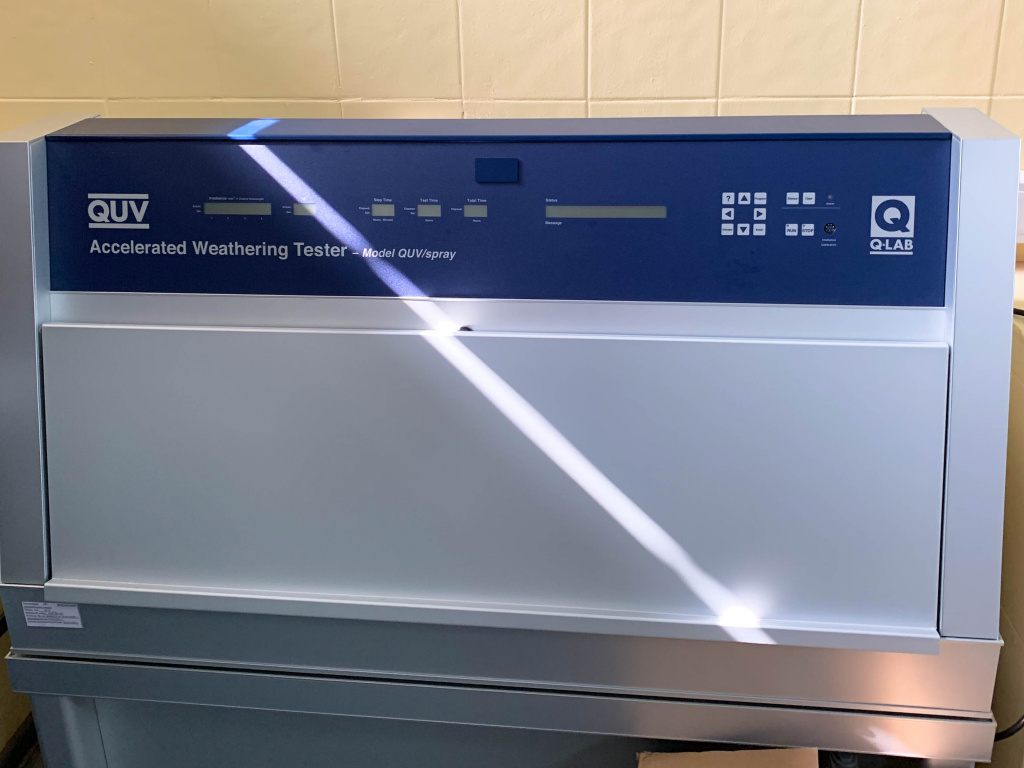
The weatherometer (artificial weather device) is designed for accelerated testing of road-building materials for resistance to climatic factors. The device creates conditions for reducing the physical and mechanical characteristics that occur under the influence of sunlight, precipitation and dew.
Tests for resistance to climatic factors make it possible to predict the behavior of materials in real operating conditions. To simulate the operating conditions in a weatherometer, materials are exposed to UV radiation and moisture at controlled elevated temperatures. Exposure to sunlight is simulated using ultraviolet lamps, and dew and precipitation are simulated using a moisture condensation and (or) irrigation system.
The essence of the test method according to GOST R 55031-2012 is to determine the strength characteristics of samples of geosynthetic materials exposed to adverse conditions. The measurement of the resistance of geosynthetic materials to UV radiation is performed by comparing the results of tensile testing of material samples exposed to UV radiation with the results of testing control samples of material that were not exposed to such exposure.
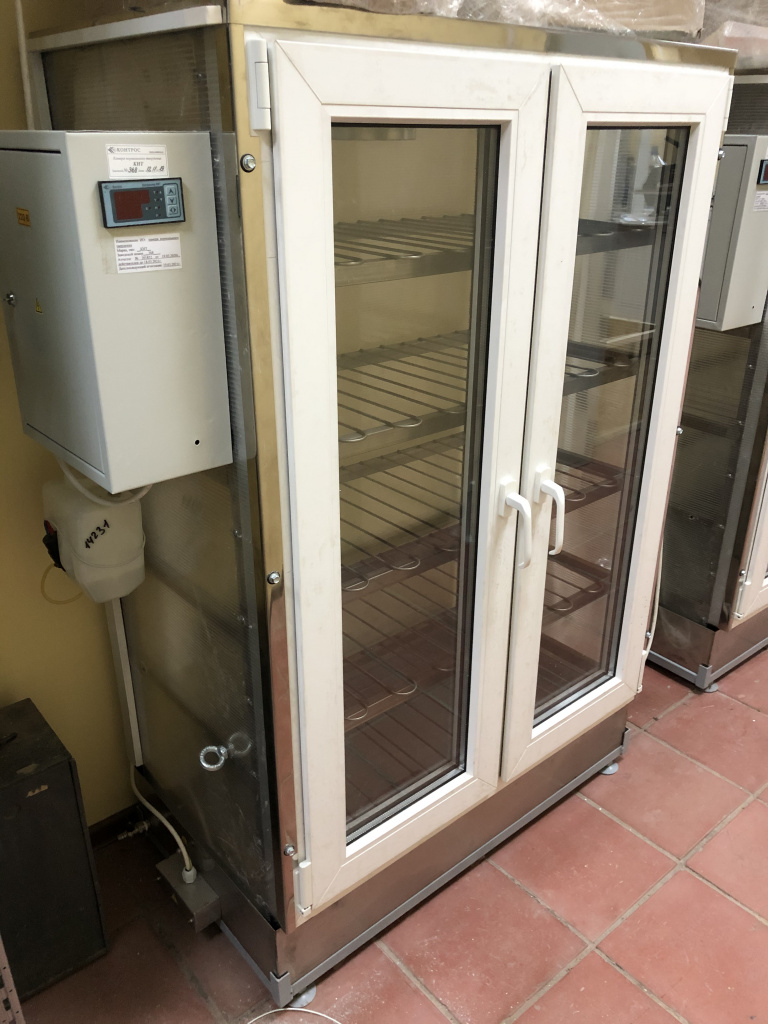
The climatic chamber for testing concrete for frost resistance allows you to evaluate the change in the operational properties of concrete under the influence of an alternating cycle of freezing and thawing. The frost resistance test is carried out in accordance with GOST 10060-2012.
The essence of the method is to compare the strength of control samples and those subjected to a cycle of alternating freezing and thawing in a climatic chamber. The test involves freezing the samples to minus 50 ± 2 ° C, followed by thawing at a temperature of plus 20 ± 2 ° C. One cycle takes up to 24 hours, and the number of cycles, depending on the brand for frost resistance, usually varies from 5 to 37. Thus, the test can take from several days to several months, and when tested in manual mode, it is quite time-consuming.
At the same time, the climatic chamber for testing concrete SM-55/50-18 WT-N allows you to fully automate this process. After loading the samples into the working chamber, the required number of freezing/thawing cycles is indicated and the program is started, after which the installation itself turns off.