Views: 1321
The event was attended by the Director General of the FAA ROSDORNII A.P. Varyatchenko.
Here is the full text of the news from the website of the Ministry of Transport of Russia. https://www.mintrans.ru/press-center/news/9037
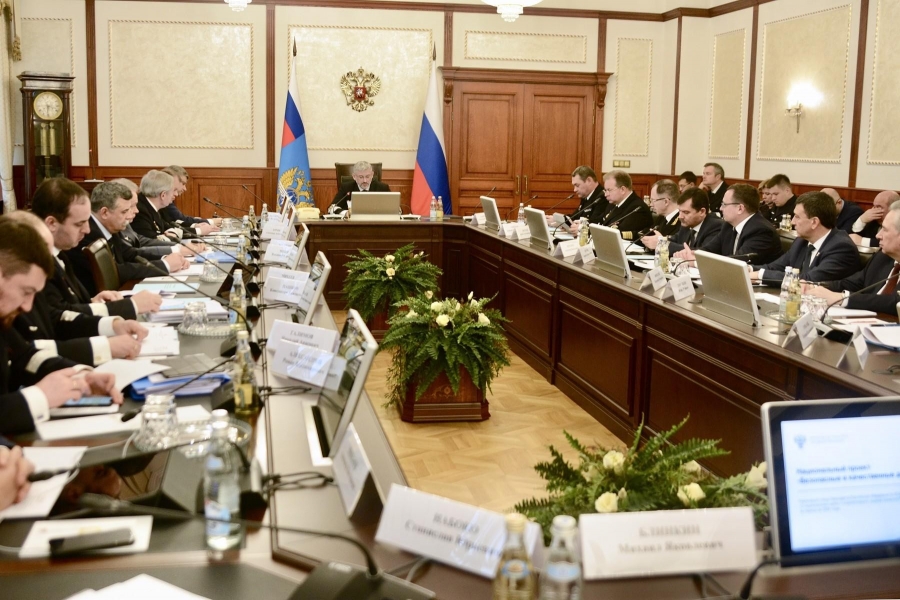
The meeting of the Board of the Ministry of Transport of Russia under the leadership of Transport Minister Yevgeny Dietrich was held on February 28. It was attended by representatives of the Presidential Administration of Russia, the Government Apparatus, the Federation Council, the State Duma, federal and regional executive authorities, industry associations and unions.
The main issue on the agenda was the discussion of the implementation of the national project "Safe and High-quality Highways" and the transport part of the Comprehensive Plan for the Modernization and Expansion of the trunk infrastructure until 2024.
The Head of the Ministry of Transport noted the importance of implementing the national project and the Comprehensive Plan. "The national project should be widely promoted in the regions, because our main customer is citizens living in them. They should clearly understand all the parameters that we plan to achieve, and the effect that they will feel for themselves. A comprehensive plan is also not abstract tasks, but quite real goals. And the residents of our country should see the first clear results of its implementation already this year. And you and I must fully feel the responsibility and the tasks assigned to us by the state," he stressed.
In turn, the first Deputy Minister of Transport Innokenty Alafinov spoke about the key indicators of the BCAD national project. He recalled that its main regional component will be implemented within the framework of the federal project "Road Network". It is necessary to reduce the share of federal and regional roads operating in overload mode by 10%. The number of places of concentration of accidents will be reduced by 2 times. It is planned to increase the share of contracts using new technologies and materials to 80%, and life cycle contracts to 70%.
Work is planned on emergency unique road structures, overpasses, transport interchanges. 40 thousand km of regional highways should be included in the standard. Engineering measures are also provided, in particular, the equipment of pedestrian crossings, cable barrier fences, lighting facilities.
It was particularly noted that from 2022 the financing of the national project will be almost completely be carried out at the expense of excise taxes transferred from the federal level.
Innokenty Alafinov stressed the importance of the system of operational reporting on the work carried out online, without paper document flow. In addition, the key to success is the proper formation of regional teams to work on the ground, as well as public control. In turn, the introduction of a system for monitoring the expenditure of road funds will increase the level of budget discipline of the regions.
The implementation of the transport part of the Comprehensive Plan for the Modernization and Expansion of the Trunk Infrastructure was also discussed. It is designed to ensure the interconnection of different modes of transport, maximum territorial coverage, and the disclosure of the export potential of the regions. It was noted that today an important task is to reformat the Comprehensive Plan into the format of a national project.
1,900 km of federal highways are to be built and upgraded by 2024. We are talking about reconstruction projects and the elimination of bottlenecks. This process will end with the formation of a seamless high-speed corridor from the ports of the Black Sea to the North-West of the country. 14 will be built detours of major cities: Ryazan, Ivanovo, Volgograd, Khasavyurt, and others. They will help to improve the connectivity of territories, reduce the load on existing highways, improve the environment by removing transit transport from cities. A significant number of single-level intersections with railways will be eliminated, dozens of bridge structures will be reconstructed. These measures will not only reduce the downtime of vehicles, but also reduce the accident rate.
The key project of the plan is the West-East high-speed corridor. For this purpose, more than 800 km of sections of federal highways will be built and modernized, which will reduce the travel time, for example, from Moscow to Samara, by 2 times - from 16 to 8 hours. The total amount of financing for this project is 655 billion rubles, of which 264 billion are extra-budgetary funds.
A significant amount of funds will be allocated to the railway component of the Comprehensive Plan - about 1.5 trillion rubles. It is planned to reduce the delivery time of containers from the Far East to the western borders of Russia to 7 days, the capacity of the BAM and Transsib will increase by 1.5 times. The breakthrough project will be the Moscow-Kazan high-speed highway. Innocent Alafinov stressed that its construction will create a mega-agglomeration covering a significant part of central Russia.
The aviation part of the plan provides for the expansion of the network of regional routes to 50% of the total share of domestic flights. 56 billion rubles from the federal budget and more than 7 billion rubles of extra-budgetary funds will be allocated for this. The reconstruction of regional airports includes work on the modernization of 66 facilities, more than half of which are located in the Far East. To fulfill these tasks, more than 200 billion rubles are provided, of which 171 billion are federal budget funds. Already this year, it is planned to start work at the airports of Novosibirsk, Tomsk, Mineralnye Vody, and others.
In addition, the board raised the issue of systematization of mandatory requirements in the field of transport, containing redundant or outdated standards. As expected, many such documents will fall under the knife of the "regulatory guillotine". Measures to improve the level of performance discipline in the Ministry of Transport and the activities of the Ministry to consider citizens' appeals were also discussed.
Here is the full text of the news from the website of the Ministry of Transport of Russia. https://www.mintrans.ru/press-center/news/9037
The meeting of the Board of the Ministry of Transport of Russia under the leadership of Transport Minister Yevgeny Dietrich was held on February 28. It was attended by representatives of the Presidential Administration of Russia, the Government Apparatus, the Federation Council, the State Duma, federal and regional executive authorities, industry associations and unions.
The main issue on the agenda was the discussion of the implementation of the national project "Safe and High-quality Highways" and the transport part of the Comprehensive Plan for the Modernization and Expansion of the trunk infrastructure until 2024.
The Head of the Ministry of Transport noted the importance of implementing the national project and the Comprehensive Plan. "The national project should be widely promoted in the regions, because our main customer is citizens living in them. They should clearly understand all the parameters that we plan to achieve, and the effect that they will feel for themselves. A comprehensive plan is also not abstract tasks, but quite real goals. And the residents of our country should see the first clear results of its implementation already this year. And you and I must fully feel the responsibility and the tasks assigned to us by the state," he stressed.
In turn, the first Deputy Minister of Transport Innokenty Alafinov spoke about the key indicators of the BCAD national project. He recalled that its main regional component will be implemented within the framework of the federal project "Road Network". It is necessary to reduce the share of federal and regional roads operating in overload mode by 10%. The number of places of concentration of accidents will be reduced by 2 times. It is planned to increase the share of contracts using new technologies and materials to 80%, and life cycle contracts to 70%.
Work is planned on emergency unique road structures, overpasses, transport interchanges. 40 thousand km of regional highways should be included in the standard. Engineering measures are also provided, in particular, the equipment of pedestrian crossings, cable barrier fences, lighting facilities.
It was particularly noted that from 2022 the financing of the national project will be almost completely be carried out at the expense of excise taxes transferred from the federal level.
Innokenty Alafinov stressed the importance of the system of operational reporting on the work carried out online, without paper document flow. In addition, the key to success is the proper formation of regional teams to work on the ground, as well as public control. In turn, the introduction of a system for monitoring the expenditure of road funds will increase the level of budget discipline of the regions.
The implementation of the transport part of the Comprehensive Plan for the Modernization and Expansion of the Trunk Infrastructure was also discussed. It is designed to ensure the interconnection of different modes of transport, maximum territorial coverage, and the disclosure of the export potential of the regions. It was noted that today an important task is to reformat the Comprehensive Plan into the format of a national project.
1,900 km of federal highways are to be built and upgraded by 2024. We are talking about reconstruction projects and the elimination of bottlenecks. This process will end with the formation of a seamless high-speed corridor from the ports of the Black Sea to the North-West of the country. 14 will be built detours of major cities: Ryazan, Ivanovo, Volgograd, Khasavyurt, and others. They will help to improve the connectivity of territories, reduce the load on existing highways, improve the environment by removing transit transport from cities. A significant number of single-level intersections with railways will be eliminated, dozens of bridge structures will be reconstructed. These measures will not only reduce the downtime of vehicles, but also reduce the accident rate.
The key project of the plan is the West-East high-speed corridor. For this purpose, more than 800 km of sections of federal highways will be built and modernized, which will reduce the travel time, for example, from Moscow to Samara, by 2 times - from 16 to 8 hours. The total amount of financing for this project is 655 billion rubles, of which 264 billion are extra-budgetary funds.
A significant amount of funds will be allocated to the railway component of the Comprehensive Plan - about 1.5 trillion rubles. It is planned to reduce the delivery time of containers from the Far East to the western borders of Russia to 7 days, the capacity of the BAM and Transsib will increase by 1.5 times. The breakthrough project will be the Moscow-Kazan high-speed highway. Innocent Alafinov stressed that its construction will create a mega-agglomeration covering a significant part of central Russia.
The aviation part of the plan provides for the expansion of the network of regional routes to 50% of the total share of domestic flights. 56 billion rubles from the federal budget and more than 7 billion rubles of extra-budgetary funds will be allocated for this. The reconstruction of regional airports includes work on the modernization of 66 facilities, more than half of which are located in the Far East. To fulfill these tasks, more than 200 billion rubles are provided, of which 171 billion are federal budget funds. Already this year, it is planned to start work at the airports of Novosibirsk, Tomsk, Mineralnye Vody, and others.
In addition, the board raised the issue of systematization of mandatory requirements in the field of transport, containing redundant or outdated standards. As expected, many such documents will fall under the knife of the "regulatory guillotine". Measures to improve the level of performance discipline in the Ministry of Transport and the activities of the Ministry to consider citizens' appeals were also discussed.